


In this guide
It’s tough working out how to build a solid retirement income.
There are a lot of moving parts. It’s essential to understand where your money is likely to come from and how you can build on what you’ve already saved.
To add perspective to your thinking, a simple ‘rule of thumb’ about retirement income might assist you.
Where does your retirement income come from?
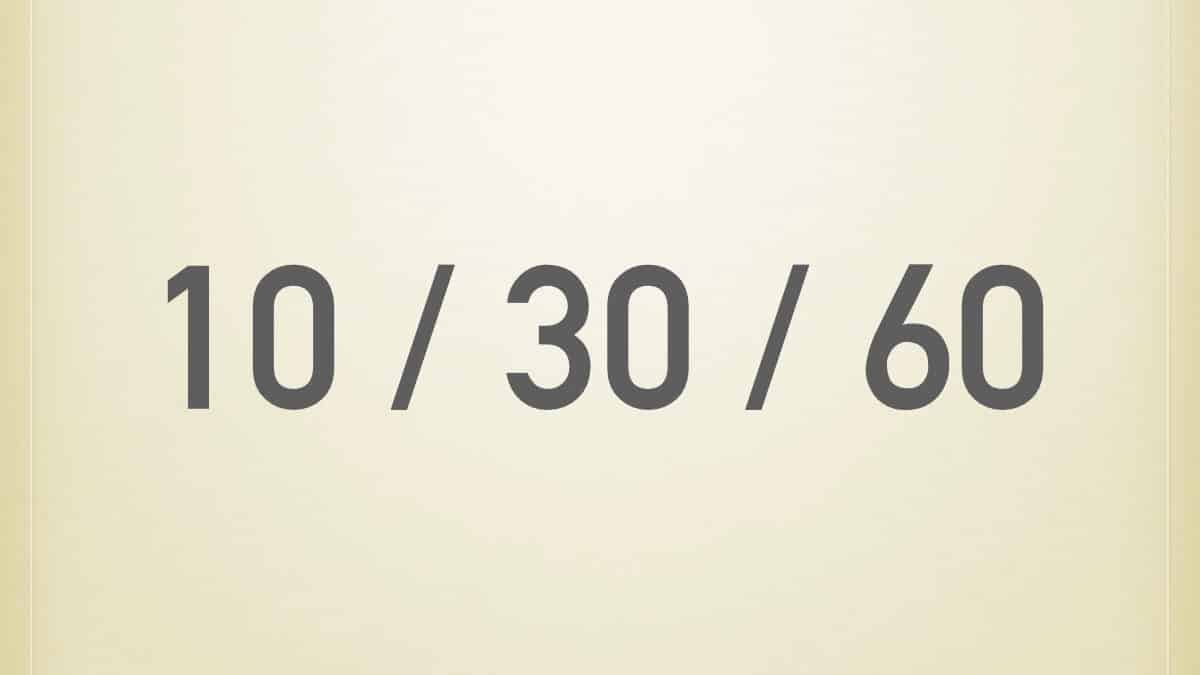
Research first undertaken in the United States some 30 years ago is still relevant for Australian super fund members today. It found for most people, around 90 cents of every dollar in retirement income comes from the earnings you achieve on your investments before and after retirement. Just 10 cents of each dollar of retirement income comes from the original contributions you made during your working life.
More surprisingly, around 60 cents in every dollar of retirement income comes from the investment earnings you achieve after you retire.
Jim Hennington, actuary at Jubilacion, has tested these calculations and adapted them for Australia’s superannuation system today (see below). He confirms the principles are still very relevant to Australians.
Although the actual percentages for each person will vary depending on their personal situation and the market conditions they live through, the principles are highly relevant to the way most people’s superannuation works over the course of their lifetime.
The practical implication is that earning a good investment return on your retirement savings is just as important, if not more important, than it was during your working life.
It’s all to do with the way investment returns work over the long term, and the impact of compound interest.
Does the 10/30/60 Rule apply to Australian retirees?
Hennington’s calculations for Australia assume the person joins a super fund at age 25 and contributes $7,000 per year (before contribution tax) with this amount rising 3.5% every year until retirement at age 67. They then begin drawing a retirement income that increases by 2.5% per year. The amount they draw gets calculated so their balance is zero when they reach age 92. While working, the assumed investment return is 6.5% per year (net of tax) less fees and charges of 0.7% per year. In retirement, the assumed return remains at 6.5% per year (assuming slightly more conservative investments but no tax) less fees and charges of 0.7%.
In Australia, based on these assumptions, their balance, contributions and net investment income look as follows:
| Age | Contributions $ per yr after 15% tax | Start of year $ balance | Investment income $ per year | Drawings $ |
|---|---|---|---|---|
| 25 | 5,950 | 0 | ||
| 26 | 6,158 | 6,127 | 177 | |
| 27 | 6,374 | 12,840 | 554 | |
| 28 | 6,597 | 20,180 | 967 | |
| 29 | 6,828 | 28,195 | 1,418 | |
| 30 | 7,067 | 36,932 | 1,909 | |
| 31 | 7,314 | 46,444 | 2,445 | |
| 32 | 7,570 | 56,786 | 3,028 | |
| 33 | 7,835 | 68,017 | 3,661 | |
| 34 | 8,109 | 80,200 | 4,349 | |
| 35 | 8,393 | 93,403 | 5,094 | |
| 36 | 8,687 | 107,698 | 5,901 | |
| 37 | 8,991 | 123,159 | 6,775 | |
| 38 | 9,306 | 139,869 | 7,719 | |
| 39 | 9,631 | 157,914 | 8,739 | |
| 40 | 9,968 | 177,386 | 9,841 | |
| 41 | 10,317 | 198,383 | 11,029 | |
| 42 | 10,678 | 221,010 | 12,310 | |
| 43 | 11,052 | 245,378 | 13,689 | |
| 44 | 11,439 | 271,605 | 15,175 | |
| 45 | 11,839 | 299,817 | 16,773 | |
| 46 | 12,254 | 330,148 | 18,492 | |
| 47 | 12,682 | 362,740 | 20,339 | |
| 48 | 13,126 | 397,747 | 22,324 | |
| 49 | 13,586 | 435,328 | 24,455 | |
| 50 | 14,061 | 475,656 | 26,742 | |
| 51 | 14,553 | 518,914 | 29,196 | |
| 52 | 15,063 | 565,295 | 31,828 | |
| 53 | 15,590 | 615,007 | 34,649 | |
| 54 | 16,136 | 668,270 | 37,673 | |
| 55 | 16,700 | 725,317 | 40,911 | |
| 56 | 17,285 | 786,397 | 44,379 | |
| 57 | 17,890 | 851,774 | 48,092 | |
| 58 | 18,516 | 921,729 | 52,066 | |
| 59 | 19,164 | 996,562 | 56,317 | |
| 60 | 19,835 | 1,076,589 | 60,863 | |
| 61 | 20,529 | 1,162,149 | 65,725 | |
| 62 | 21,248 | 1,253,600 | 70,922 | |
| 63 | 21,991 | 1,351,324 | 76,476 | |
| 64 | 22,761 | 1,455,726 | 82,411 | |
| 65 | 23,558 | 1,567,236 | 88,750 | |
| 66 | 24,382 | 1,686,314 | 95,520 | |
| 67 | 1,813,445 | 102,749 | 105,924 | |
| 68 | 1,810,826 | 103,305 | 108,572 | |
| 69 | 1,805,240 | 102,986 | 111,286 | |
| 70 | 1,796,438 | 102,484 | 114,069 | |
| 71 | 1,784,153 | 101,783 | 116,920 | |
| 72 | 1,768,100 | 100,868 | 119,843 | |
| 73 | 1,747,976 | 99,720 | 122,839 | |
| 74 | 1,723,458 | 98,321 | 125,910 | |
| 75 | 1,694,199 | 96,652 | 129,058 | |
| 76 | 1,659,832 | 94,691 | 132,285 | |
| 77 | 1,619,964 | 92,417 | 135,592 | |
| 78 | 1,574,177 | 89,805 | 138,981 | |
| 79 | 1,522,025 | 86,829 | 142,456 | |
| 80 | 1,463,032 | 83,464 | 146,017 | |
| 81 | 1,396,695 | 79,679 | 149,668 | |
| 82 | 1,322,472 | 75,445 | 153,410 | |
| 83 | 1,239,791 | 70,728 | 157,245 | |
| 84 | 1,148,040 | 65,494 | 161,176 | |
| 85 | 1,046,569 | 59,705 | 165,205 | |
| 86 | 934,686 | 53,323 | 169,335 | |
| 87 | 811,655 | 46,304 | 173,569 | |
| 88 | 676,690 | 38,604 | 177,908 | |
| 89 | 528,959 | 30,176 | 182,356 | |
| 90 | 367,572 | 20,969 | 186,915 | |
| 91 | 191,587 | 10,930 | 191,587 | |
| 92 | 0 | 0 |
If we focus on what happens in retirement, the sum of future drawings from age 67 (that is, the sum of the right-hand column of the table) was $3,618,127.
Slightly over half of this (50.1%) came from the balance they had at age 67 (which was $1,813,445) and the rest (49.9%) came from summing their investment returns after age 67 ($1,804,682).
In other words, half of their retirement income comes from investment returns after they’ve retired. Only half of their retirement income came from drawing down the balance they held at age 67.
Why do investment returns play such a big role?
Basically, as your balance grows, investment returns become a major source of cashflow. By age 41, the investment income in the above table is more than the contribution level. Most people’s super reaches a peak when they retire and start drawing money out for retirement. Depending on how much they draw each year, the balance often remains high, long into retirement.
In the retirement phase, the maths is working in a similar way to when you make standard payments on a mortgage over the 20-year or 25-year term of your home loan. During the early years, your mortgage payments consist mainly of interest – as the balance owing is high. Towards the end of the loan, as the balance owing reduces, your mortgage payments consist mainly of capital repayments.
It’s similar in retirement, your drawdowns in the early stages consist mainly of investment returns on your balance. Whereas later in retirement, as your balance reduces, your drawings mainly consist of the capital itself.
Risk and uncertainty
The above calculations are all based on fixed assumptions. This is a limitation of using simple projection models for retirement. The calculations assume a known ‘run out age’ and fixed rates of growth for investment returns and salary increases. In reality, none of these are known with certainty at all!
Retirees don’t know what future returns they will get. Nor do they know how long they will live. This means they cannot determine how much they can draw from super with any certainty. Depending on these factors, and the risk of negative returns close to retirement, the amount of drawings your super can sustain in retirement varies dramatically.
Nonetheless, instead of moving all your money into cash, which drastically reduces your investment income prospects, modern retirement models can take into account the probability of all possible outcomes. This means you can find out the level of retirement spending that you can enjoy with, say, 95% confidence that it’s sustainable for life – even if you live a long time, market returns aren’t favourable or living costs increase.
Conclusion: What does this mean for retirees?
Although choosing the right investment option or mix of assets for your super account is important during your working life, the above ‘rules of thumb’ show it is just as important in retirement.
As a retiree, you need to keep investing your nest egg throughout your retirement years with a carefully considered strategy balancing security, investment risk and good investment returns.
If you retire in your 60s, you might be in retirement for 20–30 years, and that means you need to take a longer-term view of your investments. You may wish to consider taking on some investment risk with at least part of your retirement savings with the aim of generating solid returns.
By including some growth assets (broadly shares and property) in your portfolio to provide enhanced returns, you may be able to defer the need to draw heavily on your capital amount.
History has shown growth assets usually have a better chance of delivering the good returns needed to fund your retirement income, even if you are drawing down on them at the same time. Modern modelling techniques help to trade off risk (running out of money) and return (a higher lifestyle or other goals) in the retirement phase.



Leave a Reply
You must be logged in to post a comment.