


Total and permanent disability (TPD) insurance held in super is taxed if it’s paid to you before you turn 60, so you may need more cover than the amount you want to end up with.
Use this calculator to estimate how much TPD cover you need in super to receive the lump sum you want after tax.
How to use the calculator
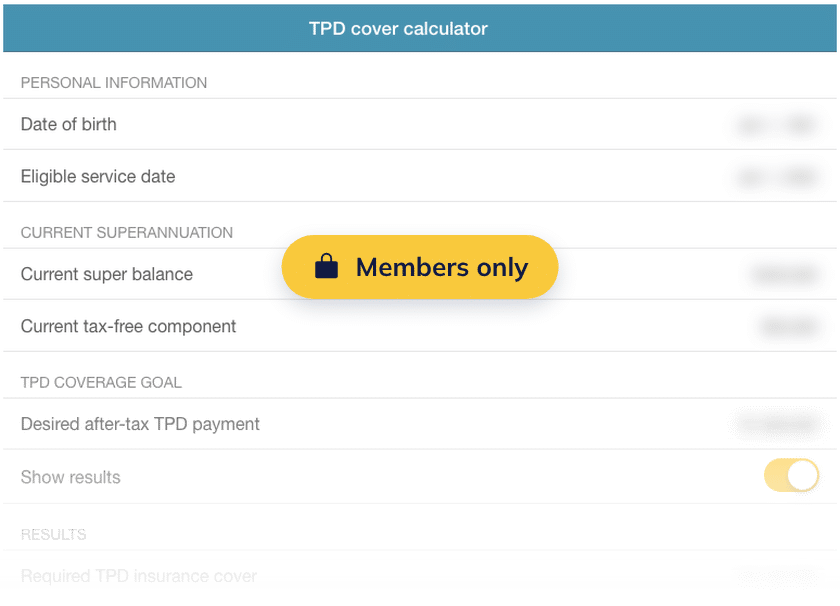
- Enter your date of birth and the eligible service date for the super account that holds your TPD cover. Your super fund can tell you this date.
- Enter your current super balance and its tax-free component.
- Enter the desired after-tax TPD payment. This is the lump sum you want to receive, not counting your current super balance.
- Turn on Show results to see the TPD cover you need in super.
- Check the help notes below the calculator if you’re unsure which figures to use.
Your eligible service date is generally the earlier of the date you joined your super fund and the date you started work with an employer who contributed to it. If you rolled money over from another fund, an earlier date may have been carried across.
Your super fund can tell you the eligible service date for your account.
A TPD lump sum from super is taxed if you are under 60 when it is paid. Part of the payment is tax free. The tax-free share is based on the number of days from when you are disabled until you turn 65, compared with the number of days from your eligible service date until 65.
The rest is taxed at 22% (20% plus the Medicare levy). From age 60, a lump sum from a taxed super fund is tax free.
Your tax-free component is mainly made up of non-concessional (after-tax) contributions. You can find it on your annual statement or in your online account. Enter nil if you don’t have one.
- Your cover will be held in a taxed super fund.
- You will keep your current balance in super until at least age 60, to draw on for retirement.
- You will withdraw the entire insured amount as a lump sum.
- Calculations are based on you becoming disabled today.
The tax-free share of a payment gets smaller as you get closer to 65, so the cover you need in super rises each year until you turn 60. From 60, the payment is tax free.
Your debts and expenses change too, so it’s worth reviewing your cover regularly.
Get more guides like this with a free account
better super and retirement decisions.

Leave a Reply
You must be logged in to post a comment.